


Why green space matters in your property search
For first-time buyers, just finding a property within budget feels like a victory. When you’re weighing up commute times against mortgage rates, checking for a nearby park can feel like a luxury you can’t afford to worry about.
However, ignoring the local environment is a compromise that might cost you more than you think in the long run.
A recent report by the Guardian reveals a worrying trend where affordability pressures are pushing buyers into ‘nature deserts’ – areas cut off from meaningful green space. It might not seem like a dealbreaker on viewing day, but living without easy access to nature changes how you live your life.
This research highlights that one in three young buyers are finding themselves in these grey zones. And while it’s often a result of housing policy and development failures rather than personal choice, it’s vital to know what you are signing up for.
What is a nature desert?
A nature desert isn’t just about lacking a pristine park. These are neighbourhoods where accessing any meaningful green space requires a car journey or lengthy walk. No local playing fields for children. No tree-lined streets for morning walks. No community gardens or riverside paths.
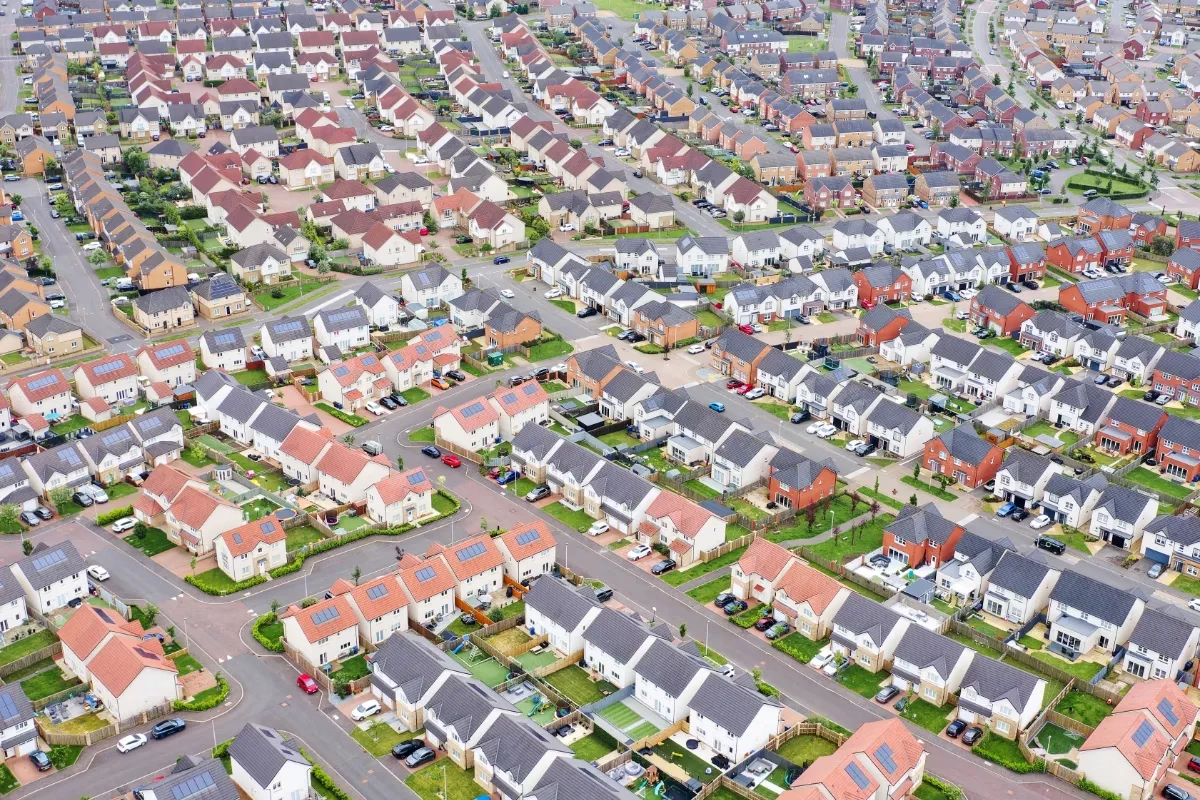
The Guardian’s analysis found these deserts clustered in two main areas: inner-city neighbourhoods where space commands premium prices, and suburban developments built without adequate green infrastructure.
For young families, this matters more than you might initially think. Children with regular access to nature show improved concentration, better physical health, and reduced stress levels. Adults benefit too, with studies linking green space access to better mental health and stronger community connections.
The hidden costs of compromising
When budgets are tight, we naturally focus on the ‘bricks and mortar’ – the parking spot, the spare room, the lease length. But the environment outside your front door dictates your daily happiness just as much as the square footage inside it. And living without accessible green space carries hidden financial costs.
Weekend trips to parks become planned events requiring travel. Children need organised activities rather than casual outdoor play. That morning run becomes a gym membership. Dog walking turns into a twice-daily challenge rather than a pleasant routine.
There is also a practical, future-proofing angle to consider. Areas with more concrete and fewer trees are more susceptible to summer heatwaves and local flooding. Green space isn’t just pretty; it’s functional infrastructure that protects your home.
Evaluating green space (beyond Google Maps)
It’s easy to spot a park on a map, but that doesn’t tell you how the area feels. Here is a practical checklist for your next viewing:
The 5-Minute Test:
- What can you hear? Stand outside the property for a moment. Trees and hedging act as sound buffers. If all you hear is traffic and sirens, you might be in a nature desert.
- Is there ‘incidental’ greenery? Look for street trees, verges, or front gardens. These small pockets of nature lower stress levels even if there isn’t a massive park nearby.
Within 15 minutes’ walk:
- Is there a proper destination? A park with a bench, a playground, or a sports field? Somewhere you can actually stop and exist, not just walk through.
- Is there easy access? Green space is less useful if you struggle to get there, or don’t feel safe.
The neighbourhood feel
- Do you see people walking, cycling, or playing outside?
- Are gardens and communal spaces well-maintained?
- Is there evidence of community activity?
Questions worth asking
Estate agents might not volunteer this information, so ask directly:
- Where’s the nearest park, and how long does it take to walk there?
- Are there any community gardens or allotments nearby?
- What outdoor facilities exist for children and teenagers?
- Where do people around here walk their dogs?
- How do local schools use outdoor space?
Don’t just rely on descriptions. Check maps, visit at different times, and walk the actual routes yourself.
Finding the balance
You might need to adjust your search parameters to find better balance. Consider these trade-offs:
Commute time vs green space: An extra 10 minutes’ travel might be worthwhile if it means daily park access rather than weekly car trips to find green space.
Property size vs location quality: A slightly smaller home in a leafier area might offer better overall living quality than extra square footage in a nature desert.
Initial price vs long-term value: Areas with good green infrastructure often hold value better and prove easier to sell when you’re ready to move on.
Alternative green spaces
Not all green space looks like traditional parks. When evaluating areas, consider:
- Canal and riverside paths offering traffic-free routes
- Cemetery parks providing peaceful walking spaces
- School playing fields with community access
- Nature reserves within reasonable distance
- Allotments offering growing opportunities
- Tree-lined streets creating green corridors
Making it work
If you’re drawn to an area with limited green space, consider whether you can create your own solutions. Some neighbourhoods have thriving community garden projects. Others organise group trips to nearby countryside. Balconies and small gardens can become green oases with planning.
Your property journey
Finding the right home means balancing many factors. Price, location, size, and local amenities all matter. But don’t underestimate the importance of accessible green space to your daily happiness and wellbeing.
We help first-time buyers weigh up these decisions every day. Beyond finding you the best mortgage deal, we give you whole-of-market guidance from someone genuinely in your corner, with transparent and ethical advice that puts your interests first.
You shouldn’t have to second-guess every decision or compromise your principles to secure a good deal. We help you make choices that align with both your budget and your values.
Ready to find the best possible mortgage for your first home? Book your free consultation now. Choose a time that works for you, and we’ll call you for a relaxed, no-pressure chat about your options.
Your home may be repossessed if you do not keep up repayments on your mortgage.